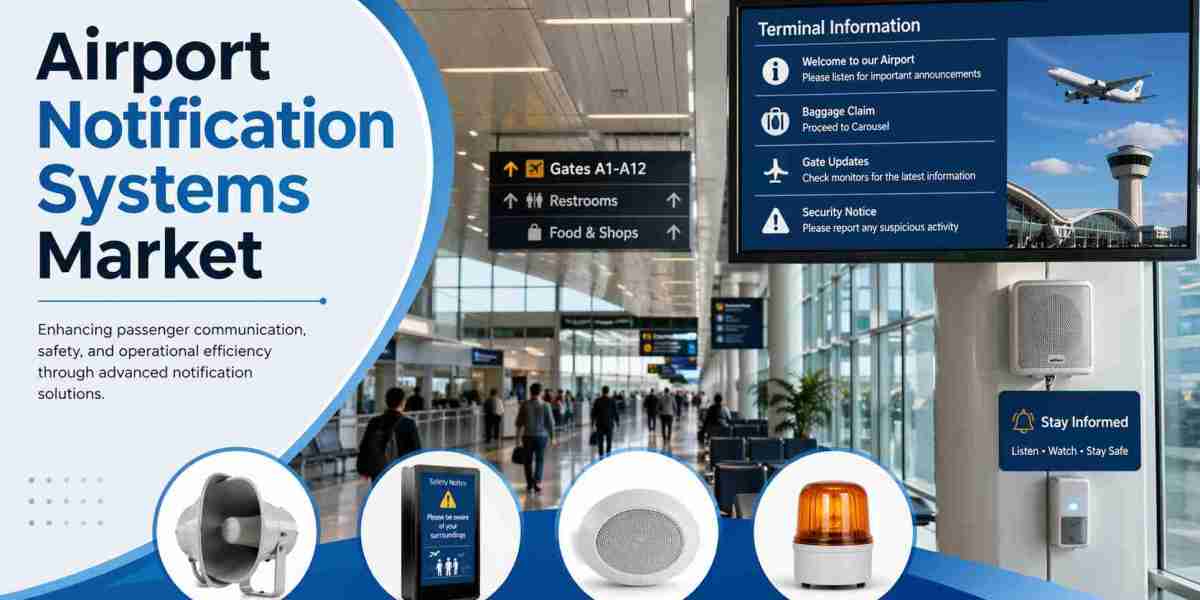

The Airport Notification Systems Market is undergoing a rapid transformation as global aviation hubs transition toward fully automated and digital environments. These systems are essential for the real time dissemination of information, ranging from flight schedules and gate assignments to critical security alerts and emergency procedures. By utilizing a network of digital displays, audio paging, and mobile integration, airports can streamline passenger movement and minimize terminal congestion. The increasing volume of global air traffic necessitates the adoption of these sophisticated tools to maintain operational flow and provide a high level of service to travelers. As technology continues to evolve, the integration of cloud based platforms and artificial intelligence is becoming a standard feature in modern airport infrastructure.
Enhancing Operational Efficiency through Digitalization
A primary driver for the adoption of notification systems is the need for improved operational efficiency within the terminal. Automated notifications reduce the manual workload of airport staff by handling routine announcements and visual updates through a centralized control system. This synchronization ensures that all communication channels provide consistent data, which is vital for preventing passenger confusion. Modern platforms allow for multi language support and accessibility features, ensuring that important information reaches a diverse audience effectively. Furthermore, the ability to update content instantly in response to changing flight conditions or maintenance issues allows airport operators to remain agile and responsive to day to day challenges.
Download Sample Report: https://www.theinsightpartners.com/sample/TIPRE00021500
Recent Developments in Smart Communication
The industry has witnessed several significant recent developments that are shaping the way information is shared with travelers. One major advancement is the move toward predictive notifications, where systems use data analytics to inform passengers about estimated wait times at security checkpoints or walking distances to specific gates. There is also a growing trend toward the use of high definition LED screens and interactive kiosks that provide personalized wayfinding assistance. These innovations are often part of larger smart airport projects that aim to create a touchless and highly efficient passenger journey. The shift toward software as a service models has also allowed smaller airports to access high level notification technology without the need for extensive on site hardware investments.
US Airport Notification Systems Market Trends
The North American region remains a dominant force in the aviation sector due to its extensive network of high traffic hubs and ongoing infrastructure upgrades. Within this landscape, the US Airport Notification Systems Market is characterized by a strong focus on security integration and passenger self service. Many major facilities across the country are investing in next generation visual paging and audio systems that can be integrated with biometric identity programs. These upgrades are often supported by government initiatives aimed at modernizing aging transportation infrastructure to meet modern safety and efficiency standards. The demand in this region is further bolstered by the presence of leading technology providers who are pioneering the use of cloud integrated communication tools to manage large scale airport operations.
Strategic Integration and Connectivity
The success of a notification system depends on its ability to integrate with other airport management tools such as flight information databases and baggage handling systems. When these systems are connected, they create a unified ecosystem where data flows seamlessly between departments. For example, a delay in baggage processing can automatically trigger a notification on the visual displays in the arrivals hall, keeping passengers and their families informed without manual intervention. This level of connectivity is essential for the modern smart airport, where data driven decision making is used to optimize every aspect of the terminal experience from check in to boarding.
Key Industry Participants
The development and deployment of these advanced systems are led by several prominent companies that specialize in aviation technology and communication infrastructure. These players are focused on creating scalable and reliable solutions for the global market.
Amadeus IT Group SA
Collins Aerospace
IDS PIDS
INFORM Software
NEC Corporation
RESA AIRPORT DATA SYSTEMS
Siemens
SITA
Simpleway Europe a.s.
Verdict Media Limited
Impact of Mobile and Personal Notifications
The proliferation of mobile technology has fundamentally changed how passengers interact with airport systems. Many travelers now prefer to receive updates via smartphone applications or text messages rather than relying solely on terminal monitors. Airport operators are responding by developing robust mobile notification frameworks that provide real time alerts tailored to the individual traveler. These systems can provide personalized gate change alerts, boarding reminders, and even promotional offers from airport retailers. By moving the point of communication to the passenger's pocket, airports can ensure that vital information is seen immediately, regardless of where the traveler is located within the facility.
Safety and Emergency Communication Protocols
In addition to daily flight information, notification systems are a critical component of airport safety and security. During emergency situations, the ability to provide clear, calm, and immediate instructions can save lives and prevent panic. Modern systems allow for the instant override of standard content to broadcast emergency alerts across all visual and audio channels. These protocols are regularly tested and updated to ensure they meet the latest safety regulations. The use of clear visual symbols and high contrast text ensures that emergency instructions are accessible to everyone, including those with hearing or visual impairments, reinforcing the airport's commitment to passenger safety.
Future Outlook
The future of the airport notification sector will likely be defined by the further integration of artificial intelligence and internet of things sensors. We expect to see more proactive systems that can detect terminal crowding and automatically redirect passengers through localized notifications. As sustainability becomes a core focus, the industry will also transition toward more energy efficient display technologies and digitized processes that reduce the need for physical signage. The long term goal is to create a fully intuitive environment where information is delivered precisely when and where it is needed, making the complex process of air travel feel simple and effortless for every passenger. Efforts to standardize data formats will also allow for better interoperability between different airports and airlines on a global scale.
Related Reports:
Aircraft Oxygen Cylinder Market
About Us
The Insight Partners is a leading global market research and consulting firm specializing in delivering actionable insights across various industries. Our research reports combine extensive primary and secondary research to provide accurate market intelligence, helping businesses make informed strategic decisions. The company provides detailed analysis on emerging technologies, market trends, competitive landscapes, and growth opportunities across sectors including technology, healthcare, manufacturing, and energy.
Contact Us:
Contact Person: Ankit Mathur
E-mail: ankit.mathur@theinsightpartners.com
Phone: +1-646-491-9876