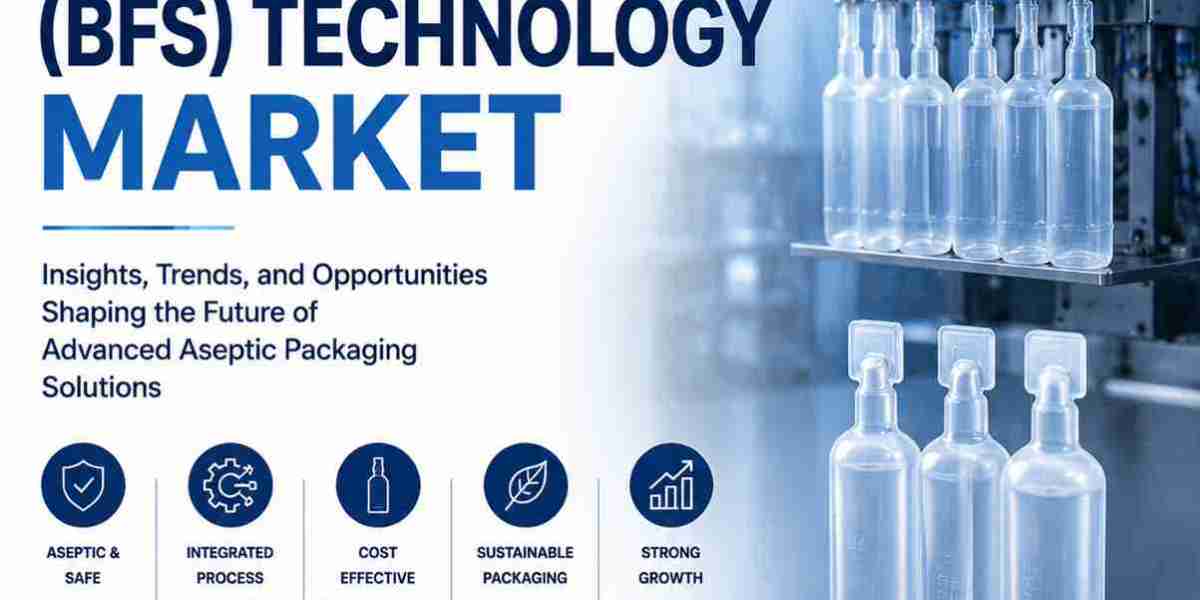

The Global Blow Fill Seal (BFS) Technology Market is witnessing accelerated expansion as pharmaceutical manufacturers increasingly prioritize sterile, contamination-free, and high-efficiency packaging systems. Blow-fill-seal technology has evolved into one of the most reliable aseptic packaging methods for liquid pharmaceuticals, biologics, ophthalmic solutions, respiratory drugs, vaccines, and unit-dose therapies. The technology integrates container formation, filling, and sealing into a single continuous automated process, significantly minimizing human intervention and contamination risks.
The market is benefiting from growing demand for injectable drugs, biologics, preservative-free formulations, and ready-to-use sterile packaging systems. Pharmaceutical companies are increasingly adopting BFS technology to improve production efficiency, comply with stringent regulatory standards, and reduce operational complexity associated with traditional glass vial filling systems. In addition, the rising focus on advanced aseptic manufacturing infrastructure across emerging pharmaceutical hubs is further strengthening market demand globally.
Read more about the report:- https://www.strategicmarketresearch.com/market-report/blow-fill-seal-technology-market
Market Overview
Blow Fill Seal technology is an advanced aseptic packaging process in which plastic containers are molded, filled, and hermetically sealed within a sterile enclosed system. Unlike conventional filling methods that require multiple production stages and extensive manual handling, BFS systems eliminate many contamination-prone processes such as container washing, sterilization tunnels, and separate sealing operations.
The technology is widely used across:
Ophthalmic solutions
Respiratory therapies
Injectable drugs
Vaccines and biologics
Saline and irrigation solutions
Unit-dose pharmaceuticals
Consumer healthcare liquids
The pharmaceutical industry continues to dominate overall BFS demand due to increasing regulatory emphasis on sterility assurance and product safety. Growing use of single-dose packaging formats and preservative-free therapies is also accelerating adoption across healthcare applications.
Key Market Drivers
1. Rising Demand for Sterile Pharmaceutical Packaging
One of the strongest growth drivers for the BFS technology market is the increasing global demand for contamination-free pharmaceutical packaging. Regulatory agencies worldwide continue to tighten standards related to aseptic processing, sterile drug manufacturing, and patient safety.
BFS technology minimizes human intervention during production, significantly lowering microbial contamination risks. This capability makes the technology highly attractive for packaging injectable drugs, ophthalmic products, respiratory medications, and biologics.
2. Expansion of Biologics and Injectable Drug Manufacturing
The rapid growth of biologics, biosimilars, vaccines, and injectable therapies is creating substantial opportunities for BFS packaging systems. Modern biologic products require highly controlled sterile environments, making BFS technology an ideal packaging solution.
The increasing prevalence of chronic diseases, autoimmune disorders, and respiratory illnesses is further driving production of injectable and inhalation-based therapies, which heavily rely on BFS packaging infrastructure.
3. Growth in Preservative-Free Ophthalmic Products
The ophthalmic pharmaceutical industry has become one of the largest users of BFS packaging systems. Single-dose eye-drop formulations require contamination-resistant packaging that supports preservative-free drug delivery.
Growing awareness regarding eye health, increasing ophthalmic disorders, and rising adoption of preservative-free formulations are significantly supporting BFS demand across global pharmaceutical markets.
4. Automation and Manufacturing Efficiency
Pharmaceutical companies are increasingly investing in automated manufacturing systems to improve throughput, reduce labor dependency, and optimize operational costs.
BFS technology offers:
High-speed production
Reduced material wastage
Lower contamination risks
Simplified manufacturing workflows
Enhanced production scalability
These operational advantages are encouraging widespread adoption across both established pharmaceutical companies and contract manufacturing organizations (CMOs/CDMOs).
Market Restraints
1. High Initial Capital Investment
Despite its long-term operational advantages, BFS technology requires substantial upfront investment in specialized machinery, sterile manufacturing infrastructure, and validation systems.
Small and mid-sized pharmaceutical manufacturers often face financial challenges when adopting BFS systems, particularly in emerging markets with limited capital resources.
2. Complex Regulatory Validation Requirements
BFS manufacturing environments must comply with stringent global regulatory frameworks, including aseptic processing standards, container closure integrity testing, and validation documentation requirements.
The need for extensive compliance procedures can increase implementation timelines and operational costs, especially for companies entering highly regulated export markets.
3. Material Compatibility Limitations
Certain highly sensitive pharmaceutical formulations may require specialized packaging materials with advanced barrier properties. Not all drug formulations are fully compatible with polymer-based BFS containers, which may limit adoption in specific therapeutic categories.
Market Opportunities
1. Expansion in Emerging Pharmaceutical Markets
Asia-Pacific is emerging as one of the fastest-growing regions for BFS technology adoption due to rapid pharmaceutical manufacturing expansion in countries such as India and China.
Government investments in healthcare infrastructure, growing generic drug production, and increasing export-oriented sterile manufacturing are creating strong growth opportunities for BFS system providers.
2. Increasing Demand for Unit-Dose Packaging
Healthcare providers are increasingly adopting unit-dose packaging formats to improve dosage accuracy, reduce contamination risks, and enhance patient convenience.
BFS technology is particularly well-suited for producing:
Nebulizer solutions
Ophthalmic ampoules
Saline flushes
Pediatric drug formulations
Vaccine diluents
The growing preference for ready-to-use sterile packaging solutions is expected to significantly boost future market demand.
3. Growth of Contract Development and Manufacturing Organizations (CDMOs)
The pharmaceutical outsourcing trend is driving strong investments in BFS-enabled manufacturing facilities. CDMOs are expanding aseptic production capacities to support biologics, specialty injectables, and clinical-stage drug manufacturing.
Companies offering advanced BFS capabilities are gaining competitive advantages through flexible production scalability and regulatory-compliant sterile manufacturing services.
Latest Impact Analysis
Impact of Biologics and Vaccine Manufacturing Expansion
The rapid expansion of biologics and vaccine manufacturing capacity worldwide has accelerated investments in aseptic packaging technologies. BFS systems are increasingly used for packaging sensitive injectable formulations that require high sterility assurance.
The technology gained substantial visibility following global vaccine manufacturing expansion initiatives, where pharmaceutical companies sought scalable sterile packaging infrastructure.
Shift Toward Single-Use and Ready-to-Administer Packaging
Healthcare systems are transitioning toward ready-to-administer and single-use packaging formats to improve patient safety and reduce preparation errors within hospitals and clinical environments.
BFS technology aligns strongly with this trend by enabling production of compact, sterile, and disposable packaging systems suitable for emergency medicine, respiratory therapy, and ophthalmic care.
Rising Sustainability Considerations
Manufacturers are increasingly focusing on recyclable polymers, material optimization, and energy-efficient BFS systems to improve sustainability performance.
The market is expected to witness further innovation in lightweight packaging materials and environmentally optimized aseptic manufacturing technologies over the coming years.
Market Segmentation
By Product Type
Ampoules
Bottles
Vials
By Material Type
Polyethylene (PE)
Polypropylene (PP)
By Machine Type
Rotary BFS Machines
Shuttle BFS Machines
By Application
Pharmaceuticals
Ophthalmics
Respiratory Therapies
Vaccines & Biologics
Irrigation Solutions
Consumer Healthcare
By Region
North America
Europe
Asia-Pacific
Latin America
Middle East & Africa
Regional Analysis
North America
North America remains a major BFS technology market due to its advanced pharmaceutical manufacturing infrastructure, strong biologics industry, and stringent regulatory environment.
The United States continues to lead regional adoption owing to high demand for injectable drugs, respiratory therapies, and hospital-ready sterile packaging solutions.
Europe
Europe maintains a strong position in the BFS market due to its well-established pharmaceutical sector and significant investments in aseptic manufacturing modernization.
Germany, France, and Switzerland remain key hubs for advanced sterile packaging innovation and BFS equipment development.
Asia-Pacific
Asia-Pacific is projected to witness the fastest growth during the forecast period. Expanding pharmaceutical exports, rising generic drug manufacturing, and growing investments in healthcare infrastructure are driving strong BFS adoption across India and China.
Latin America and Middle East & Africa
Emerging economies are increasingly investing in sterile pharmaceutical production and hospital infrastructure modernization, creating new opportunities for BFS technology providers.
Competitive Landscape
The BFS technology market is moderately consolidated, with leading companies focusing on technological innovation, capacity expansion, and strategic collaborations.
Major companies operating in the market include:
Rommelag
Catalent
Recipharm
Unither Pharmaceuticals
Weiler Engineering
Amanta Healthcare
Stevanato Group
West Pharmaceutical Services
Companies are investing heavily in:
High-speed BFS systems
Advanced automation
Sterile packaging validation
Biologics-compatible packaging
Sustainable polymer technologies
Flexible manufacturing platforms
Strategic partnerships between pharmaceutical manufacturers and BFS-focused CDMOs are also increasing rapidly as demand for sterile outsourced manufacturing continues to rise globally.
Market Forecast and Future Outlook
The Blow Fill Seal Technology Market is expected to maintain strong long-term growth as pharmaceutical manufacturers increasingly prioritize contamination-free packaging, automated sterile manufacturing, and high-efficiency production systems.
Future market expansion will be supported by:
Rising biologics production
Growth in injectable therapeutics
Expansion of respiratory drug manufacturing
Increasing demand for preservative-free formulations
Advancements in aseptic automation
Expanding pharmaceutical infrastructure in emerging economies
The market is likely to witness continuous innovation in packaging materials, automation systems, digital monitoring technologies, and sustainable manufacturing solutions, positioning BFS technology as a critical component of the future pharmaceutical packaging ecosystem.