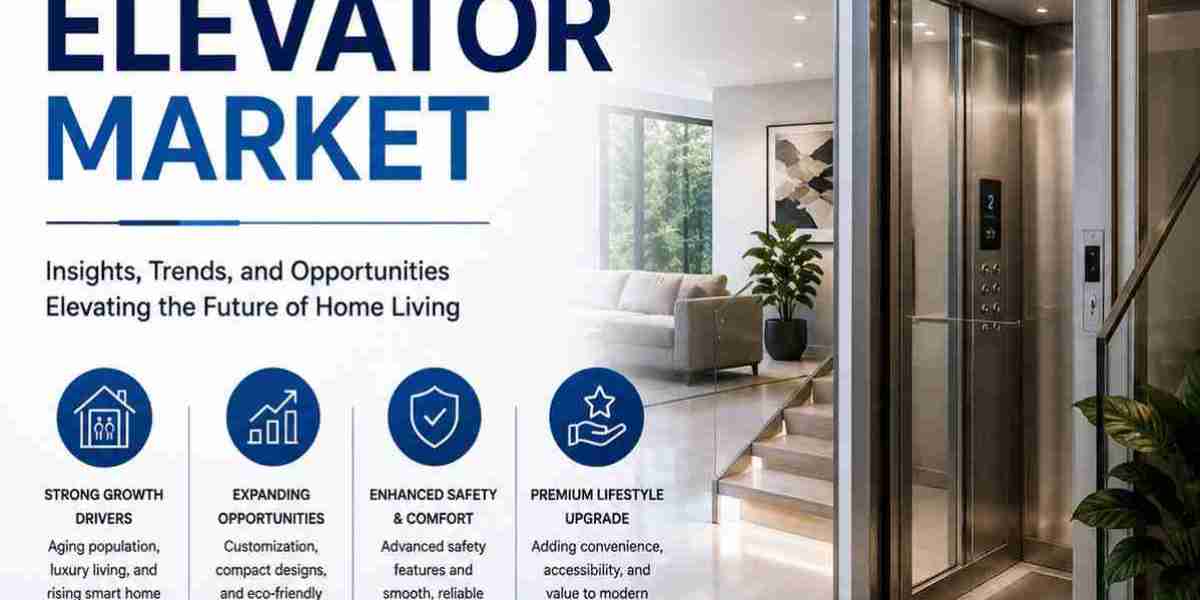

The global residential elevator market is witnessing strong growth as homeowners increasingly prioritize accessibility, convenience, safety, and luxury living solutions. Rising urbanization, expanding multi-story residential construction, and growing awareness regarding mobility assistance technologies are significantly supporting the adoption of residential elevator systems across both developed and emerging economies.
According to industry analysis, the Global Residential Elevator Market is valued at USD 16.2 billion in 2024 and is projected to reach approximately USD 24.6 billion by 2030, growing at a CAGR of 7.2% during the forecast period. Market growth is being driven by the rising aging population, increasing luxury housing developments, growing retrofit demand in existing residential properties, and rapid integration of smart home technologies.
Residential elevators are specialized vertical transportation systems designed for private homes, villas, duplexes, apartments, and premium residential complexes. These elevators improve mobility and convenience while enhancing property value and supporting long-term accessibility for elderly individuals and people with physical limitations.
Aging Population and Accessibility Needs Driving Market Demand
One of the major factors accelerating growth in the residential elevator market is the increasing global aging population. Many elderly homeowners are seeking long-term mobility solutions that allow them to remain in their homes comfortably without relocating to assisted living facilities.
Residential elevators are becoming increasingly important in aging-in-place housing strategies because they improve accessibility and reduce the risks associated with stair-related injuries. Families are increasingly investing in home mobility systems to support independent living and improve quality of life for aging residents.
The growing prevalence of mobility-related disabilities and rehabilitation needs is also contributing to rising demand for compact and user-friendly residential elevator systems.
Luxury Housing Developments Supporting Market Expansion
The rapid growth of luxury residential construction is another major contributor to market expansion. High-end villas, duplex apartments, smart homes, and premium residential towers are increasingly incorporating residential elevators as both functional and lifestyle-enhancing features.
Modern homeowners are prioritizing convenience, interior aesthetics, and advanced home automation technologies, encouraging developers to integrate customized elevator systems into luxury housing projects. Residential elevators are increasingly viewed as symbols of modern living and premium real estate design.
Architects and developers are also utilizing compact elevator technologies to optimize space utilization while improving accessibility across multi-level residential structures.
Rising Retrofit Installations Creating New Opportunities
Retrofit demand represents a major growth opportunity within the residential elevator industry. Many existing homes are being upgraded with modern accessibility systems as homeowners seek long-term mobility improvements without relocating.
Technological advancements in machine-room-less (MRL) elevators, pneumatic vacuum elevators, and compact hydraulic systems are making residential elevator installations more practical in existing buildings with limited structural modifications.
Increased awareness regarding home accessibility regulations and rising investments in residential modernization projects are further accelerating retrofit adoption globally.
Smart Home Integration Reshaping the Industry
The increasing adoption of smart home ecosystems is transforming the residential elevator market. Manufacturers are integrating IoT-enabled controls, touchscreen interfaces, voice-command systems, predictive maintenance technologies, and remote monitoring capabilities into modern elevator platforms.
Smart residential elevators can now integrate with home automation systems, allowing users to control elevator operations through mobile applications and centralized smart home interfaces. Enhanced energy efficiency, personalized access control, and advanced safety diagnostics are becoming important product differentiation factors.
The integration of AI-driven monitoring systems and predictive maintenance technologies is also improving operational reliability while reducing maintenance costs for homeowners.
Market Restraints and Industry Challenges
Despite strong growth potential, the residential elevator market faces several operational and economic challenges. One of the primary restraints is the relatively high installation cost associated with elevator systems, particularly in retrofit applications requiring structural modifications.
Maintenance expenses, inspection requirements, and installation complexity may limit adoption among middle-income households. In some developing regions, limited awareness regarding residential accessibility solutions can also slow market penetration.
Space limitations within older residential buildings may create technical challenges for elevator retrofitting projects. Additionally, fluctuations in raw material prices and supply chain disruptions affecting steel, electronic components, and automation systems may influence production costs.
Strict building regulations and certification requirements across various countries can also increase compliance complexity for manufacturers and installers.
Technological Advancements Driving Product Innovation
Continuous innovation in elevator engineering and home automation technologies is significantly improving market competitiveness. Manufacturers are increasingly focusing on compact elevator systems, energy-efficient drive technologies, and advanced safety features tailored for residential environments.
Machine-room-less elevators are becoming highly popular due to reduced space requirements and lower installation complexity. Pneumatic vacuum elevators are also gaining traction for their modern aesthetics, energy efficiency, and simplified retrofit compatibility.
Companies are further investing in noise reduction systems, customizable cabin designs, touchless controls, and enhanced emergency backup technologies to improve user experience and safety performance.
Competitive Landscape Remains Highly Competitive
The global residential elevator market remains highly competitive, with major elevator manufacturers, specialized mobility solution providers, and regional installation companies competing across residential construction and retrofit segments.
Leading companies are focusing on strategic partnerships with homebuilders, smart home technology providers, and interior design firms to strengthen market positioning. Product customization, installation flexibility, after-sales service quality, and smart integration capabilities are becoming key competitive differentiators.
Manufacturers are also expanding regional distribution networks and investing in digital maintenance platforms to improve operational support and customer engagement.
Regional Market Trends
North America represents a major market for residential elevators due to rising aging demographics, strong luxury housing demand, and increasing home renovation activity. The United States continues to witness growing adoption of residential mobility systems across suburban housing developments and retirement-oriented residential communities.
Europe maintains stable market growth supported by accessibility regulations, urban residential modernization projects, and increasing demand for energy-efficient home infrastructure solutions.
Asia Pacific is expected to emerge as the fastest-growing regional market during the forecast period. Rapid urbanization, rising disposable incomes, expanding luxury real estate development, and growing smart home adoption across China, India, Japan, and Southeast Asia are significantly accelerating market demand.
The Middle East is also witnessing increasing installation of premium residential elevators across luxury villas, high-end apartments, and smart residential developments.
Future Outlook
The future outlook for the residential elevator market remains highly positive as accessibility awareness, smart home adoption, and luxury housing development continue to expand globally. Rising investments in aging-friendly housing infrastructure and residential modernization are expected to sustain long-term market growth.
Advancements in compact elevator technologies, AI-enabled maintenance systems, energy-efficient designs, and integrated smart home connectivity are likely to further strengthen product adoption. As homeowners increasingly prioritize mobility, convenience, and future-ready residential infrastructure, residential elevators are expected to become a more common feature in modern housing environments worldwide.
Related Reports:
Energy Efficient Elevators Market
Building Automation Systems Market
Building Information Modelling Market